


VDOT Study Explores Bi-Directional I-95 Express Lanes for 24/7 Two-Way Service
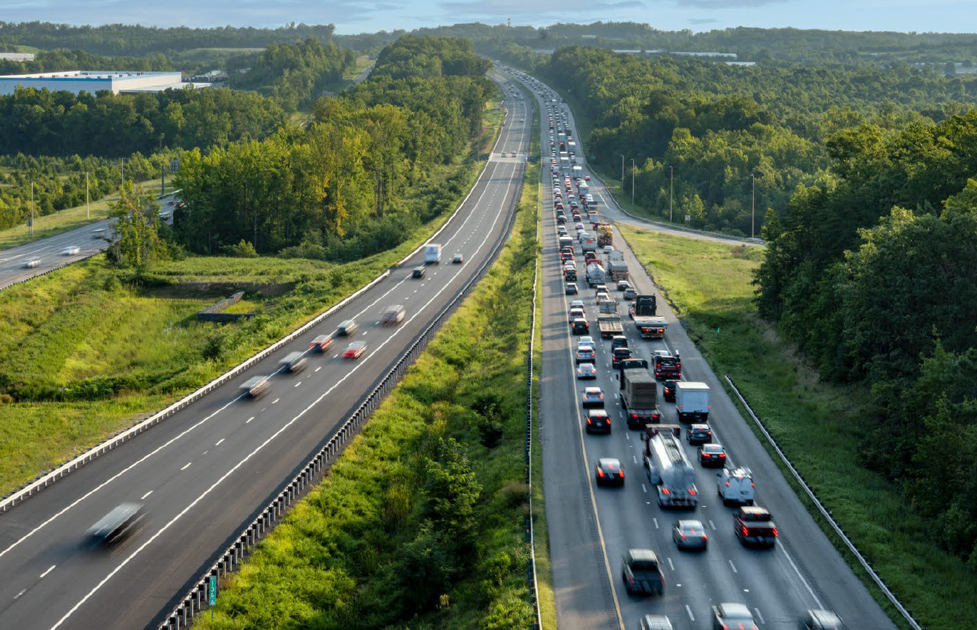
The Prince William Board of County Supervisors received an informational presentation during its Oct. 20 meeting from the Virginia Department of Transportation (VDOT) on the feasibility of converting the Interstate 95 reversible express lanes to bi-directional operations to provide 24/7 two-way express service.
The express lanes currently operate in one direction at a time, with the direction changing based on established weekday and weekend schedules. This means drivers traveling in the opposite direction cannot access the express lanes. The proposed bi-directional configuration would allow express lane travel in both directions at all times.
The proposed project, led by VDOT, is still in the feasibility stage. Feasibility has not yet been determined because potential property, traffic, road configuration, ingress and egress, and environmental impacts require further study. The schedule and construction timeline also remain uncertain, pending the results of the study, necessary approvals and a commercial agreement.
The study is evaluating approximately 45 miles of the I-95 Express Lanes from near the Springfield Interchange in Fairfax County to Spotsylvania County. Under the concept presented to the Board, three express lanes would operate in each direction from the Franconia-Springfield Parkway area to Prince William Parkway. From Prince William Parkway south, two express lanes would operate in each direction, including an approximately 10-mile extension of the bi-directional express lanes south of U.S. 17.
Preliminary road layouts for the Prince William County portion of the corridor evaluated ramp modifications and access improvements to replace reversible ramps where needed.
The study will also consider impacts on OmniRide, whose commuter buses benefit from reduced travel times when traveling in the same direction as the express lanes. Because the express lanes operate in only one direction at a time, buses traveling in the opposite direction must use the regular lanes.
VDOT is currently collecting field data and conducting preliminary engineering and environmental studies.
A preliminary assessment indicated that much of the work could proceed within existing rights-of-way, although some additional property acquisition may be needed in certain locations. According to VDOT, their goal is to minimize property impacts.
According to the presentation, VDOT plans to hold public information meetings in 2027 and 2028, while planning and environmental analysis are ongoing. The meetings will inform residents, businesses and other stakeholders about the proposed project and gather input. A public hearing will also be held in 2028.
To view the VDOT presentation, visit the Board of County Supervisors webpage.
Latest Press Releases


