


All About the Birds: The Art of Birding
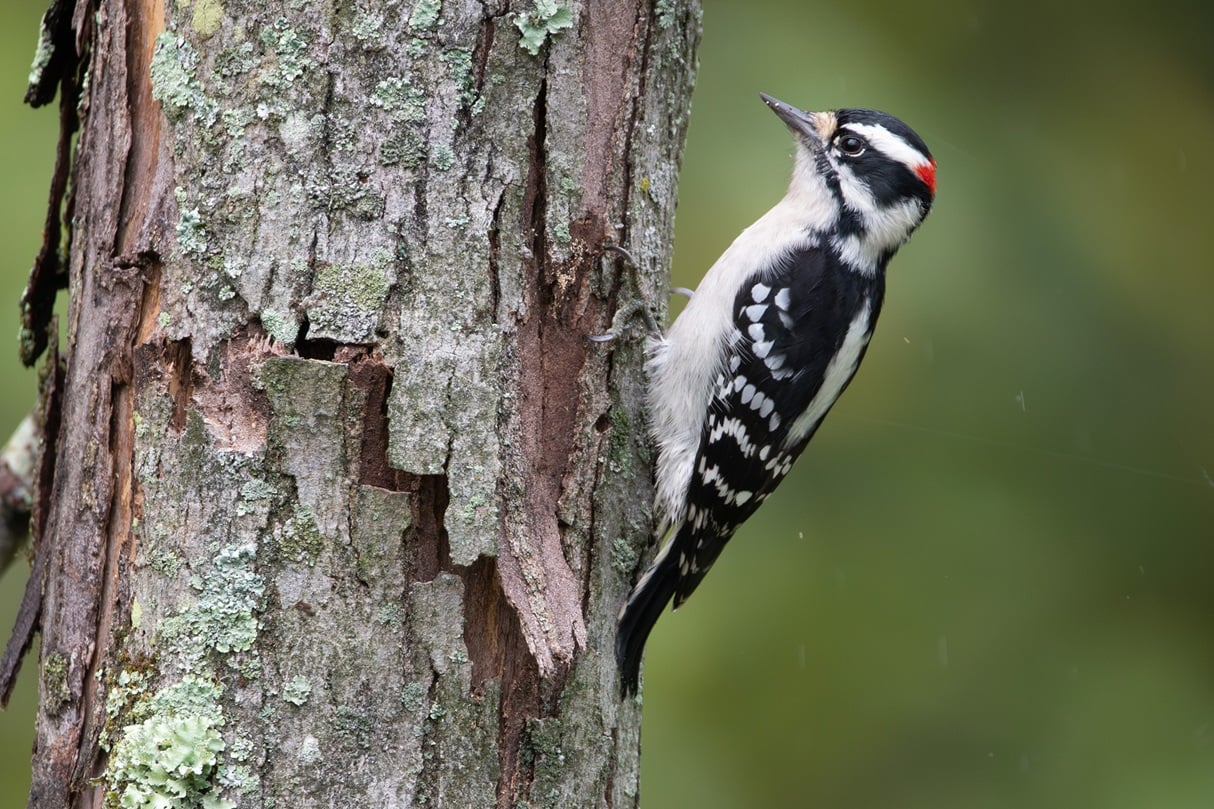
(Pictured above: a Downy Woodpecker - photo by Candice Lowther)
You hear them chirping, you see them flying, landing on trees, or even your porch but how much do you know about birds? Maybe you’ve never given much thought to the feathered creatures that live among us or maybe you’ve always wanted to know more. If you’re more the latter than birding might just interest you. What is birding you ask? The National Audubon Society defines birding as “the act of appreciating and observing birds.” It’s as simple as that. And Virginia Master Naturalist Candice Lowther who knows “all about the birds” can you show you the way.
Lowther whose background is in biology learned about birding 33 years ago.
“I was getting a Bachelor’s Degree in Biology and Environmental Science, when I went birding for the first time in 1993. I rode with two high school biology teachers on a Christmas bird count, and there was an American kestrel out the window, and they said, “look at the bird!” And I said, “yeah, I see the bird.” They said, “no, look at the bird.”
Lowther who recounts she had a really old pair of binoculars at the time and was trying to adjust them when she finally got them in focus says that it was her “aha moment.” Because not only did she look at the bird and see that it was an amazing bird but realized that she could also know something about it.
“It hit me that I can know its name, and where it lives, and what it eats, so that just was like a paradigm shift in my head,” says Lowther. “Sure, I've always liked birds, but I wanted to know more about them, and so I got better binoculars, and that made a big difference.”
Lowther then began birding regularly because it wasn't just about appreciating them, but it was the quest to find out more and see more, not just what they look like, but what they sound like. Fast forward to present day and Lowther can now recognize birds from a distance by their sound.
In Prince William County if you’re wondering what birds you might see (and hear) throughout the different seasons, Lowther says there are some birds in Virginia that are resident and are here year-round; some birds that are only here during our warmer months and usually for breeding; and then come winter there are some that are only here in the wintertime where they're wintering, like ducks.
“In every season, you've got something different to look at, which is what I love because it's always changing and it's always unpredictable,” she says. “You might have a sense of, okay, if I go to this park, in this season, I'll probably see these birds, but there are always surprises you know? And so spring is fun. I love it!”
In the spring Lowther says you’ll find birds in their “fanciest feathers” because they’re trying to impress one another.
“You've got, you know, the flowers coming out, and the birds are in their fanciest feathers because they're trying to impress one another, establish territories and nest. And you’ll notice them more because many of them are singing. And so they're conspicuous in the spring.”
Then she says in the summer you get to see the breeding birds, you can watch parents feeding young, and you’ll notice very young, awkward-looking birds, kind of hopping around, making weird noise, fluttering their wings, begging.
“In the fall, there's more birds than at the other times of year, because you've got the adults plus all those young. But they're much more cryptic, because they're no longer in the breeding plumage, and so they're a little bit more camouflaged,” adds Lowther. “They're not trying to attract one another or repel one another, and so they're not singing as much.”
Come wintertime she says is when we get the really cool ducks.
“You always hear about ducks flying south for the winter and we are that (southern) place. So they breed up in the northern part of the U.S. and up into Canada. And they attract their mates during the winter. So the ducks in the winter are fancy. Whereas everyone else is kind of, you know, more drab and camouflage.”
“In Prince William County (and surrounding areas) we get mergansers, and Bufflehead, and widgeons, and just, you know, different kinds of goop, geese, and it's just, it's a lot of fun,” she adds.
Lowther says she always has a trip in February to go look for ducks at Veterans Park.
“That's a good place for the dabbling ducks. They're the ones like mallards, the dabbling ducks. They're in shallow water. They just kind of tip their head into the water to feed, and then they right themselves. They don't go all the way under as much as a diving duck would.”
For those who want to get started with birding she recommends getting a good pair of binoculars and learning how to use them.
“I make sure that people know how to use them; reinforce not to look at the sun, because looking at the sun with binoculars is going to be more damaging than looking at the sun without binoculars. So you know, I offer some safety tips. I also give them kind of an introduction to the spotting scope, which is basically like a telescope for birds.”
“You don't realize how much detail you're missing if you've never used binoculars or spotting scope to look at an animal,” adds Lowther. “I really, really, really like getting new people excited about it and showing them things that they didn't know existed. That just fulfills me inside.”
If you’re interested in doing some birding with Lowther as your guide, Prince William County Parks and Recreation has a couple of upcoming programs available:
Nest to Sky – Family Birding – Ages 4+
This exciting program led by Master Naturalist Candice Lowther is designed for families to explore the world of birds together. From spotting nests to identifying birds, participants will learn about local species, their habitats, and the important role they play in nature. Whether you're new to birding or seasoned birdwatchers, this program is the perfect way for families to enjoy birding together. (Please note: program may be canceled in the event of inclement weather.) Limited spots available. Purchase tickets today for Nest to Sky – Family Birding on Saturday, June 27.
Wings in the Wild – Ages 6-13
Explore the fascinating world of birds and butterflies through hands-on observation and discovery. Participants will learn to identify different species by color, size, and markings while exploring the habitat that helps them survive. A nature journal and pencil are included to record observations and create drawings. (Please note: program may be canceled in the event of inclement weather.) Buy tickets today for Wings in the Wild on Sunday, August 16.
Related links:
Latest Press Releases


