


 Back
Back


Mosquito Control Program
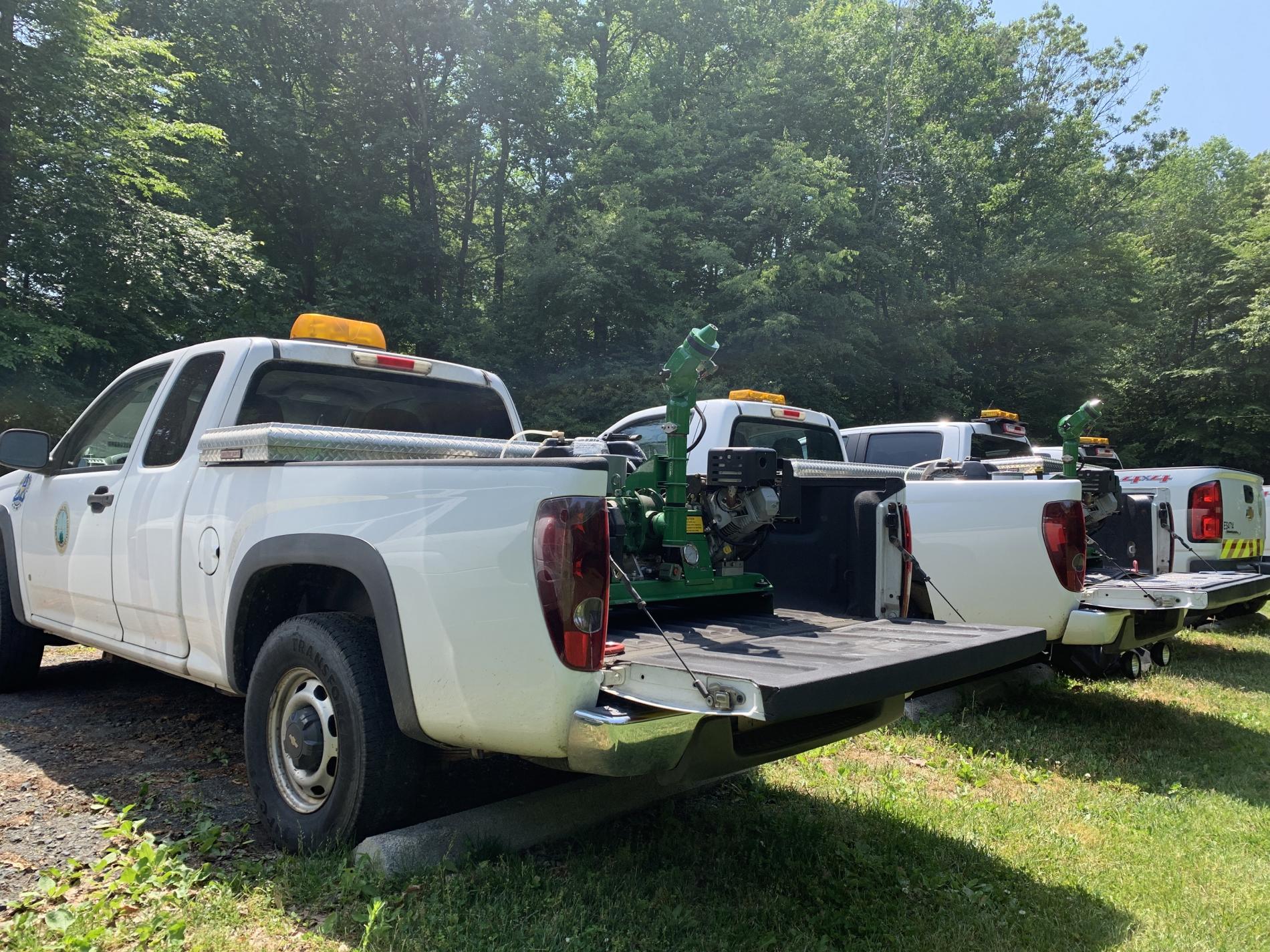
Managing mosquitoes in Prince William County goes far beyond spray trucks. Our branch follows Integrated Pest Management (IPM) principles, focusing first on county-wide larval surveillance and treatment, with adulticide spray reserved as a last resort when public health thresholds demand it. Below you will find our spray block map and spray schedules for adulticide and wide-area larvicide treatments, and you can learn more about our overall program further down the page. Residents who wish to be excluded from adulticide spray routes can also contact us to be added to our no-spray list.
ADULTICIDE SCHEDULE 2026
PLEASE CALL 703-792-6279 OR EMAIL [email protected] IF YOU HAVE ANY QUESTIONS OR CONCERNS. Products used: Zenivex E4 RTU or ReMoa Tri
| Date |
Spray Blocks |
| August 26, 2026 | Kerrydale (66, 67, 75) and Hampton MS (formerly Godwin MS - 24, 25, 26, 27, 28) |
| September 2, 2026 | P.S. Airport (85) and Dale City ES (113 & 114) |
WIDE AREA LARVICIDE SPRAY (WALS) SCHEDULE
While also using a truck mounted sprayer, WALS should not be confused with our adulticide sprays. WALS is a larval control technique, using a biological larvicide (Bti) to target immature mosquitoes and poses no threat to people, pets, wildlife, or pollinators. For this reason, WALS sprays are listed by neighborhoods instead of discrete spray blocks. Product used: Vectobac WDG
|
Date |
Neighborhoods |
| September 3, 2026 | NW section of Eagles Point (Woodbridge), Old Coach/Old Kings roads (Woodbridge), Farm Creek Drive |
| September 4, 2026 | Cotton Mill Drive, Antietam Rd to Old Bridge via Seminole, Roseberry |
| September 10, 2026 | Marumsco Hills (W Longview Dr.) |
For more information about the larvicide please see the CDC fact sheet here and the EPA fact sheet here.
OUR PROGRAM
Our Primary Control Method: Larval Surveillance & Treatment
The most effective form of mosquito control happens before mosquitoes ever take flight. Field staff inspect and treat larval surveillance sites county-wide Monday through Friday throughout the mosquito season, applying Bacillus thuringiensis israelensis (Bti), a naturally occurring bacterium that selectively targets mosquito larvae while posing no harm to people, pets, wildlife, or pollinators. Our branch also operates truck-mounted Wide Area Larviciding Systems (WALS) to deliver Bti across larger areas with standing water or drainage features. Like targeted site treatments, WALS is a larviciding technique targeting immature mosquitoes and should not be confused with adulticide spray operations.
Adult Mosquito Spray (Adulticide): A Last Resort
Adulticide spray is deployed only when surveillance data and public health thresholds warrant it. There are two primary triggers:
- Trap thresholds: If adult mosquito surveillance traps in a given area meet or exceed an established threshold of female mosquitoes on a given night, that area may be scheduled for adulticide treatment.
- Positive West Nile Virus detection: If mosquitoes collected from a trap area test positive for West Nile Virus or another arbovirus, this can trigger a spray response for that area.
There is no fixed schedule or geographic order for adulticide spray. Treatment is driven by surveillance data. Spraying typically occurs at night but may take place during daytime hours when conditions warrant.
It's important to understand the limitations of adulticide spray. It only affects adult mosquitoes that are actively flying and come into direct contact with the spray at the moment of application, and has no effect on mosquitoes that are resting or sheltering. Overreliance on adulticide can also drive pesticide resistance, undermining its effectiveness over time. For these reasons, adulticide is always considered supplemental to our larval control efforts, not a replacement.
One of Prince William County's most numerous and problematic species, the Asian Tiger Mosquito, is largely unaffected by adulticide spray because it is inactive and at rest during evening and nighttime hours. This species breeds in artificial containers and is extremely difficult to control. You can help by emptying or flushing out any containers holding a tablespoon or more of water at least once a week.
Protecting Pollinators
We are committed to minimizing the impact of adulticide applications on non-target insects, especially pollinators, and take several steps to reduce by-kill. Adulticide spray is conducted at or after sunset, when most bees and pollinators have returned to their hives or nests and are no longer foraging. We use Ultra-Low Volume (ULV) sprayers, which release very small amounts of active ingredient, reducing the overall pesticide load in the environment. Our sprayers are also precisely calibrated to produce the optimal droplet size, fine enough to remain airborne and contact flying mosquitoes but not so broad as to settle unnecessarily on vegetation or flowers. Any resident may contact us to be placed on our no spray list via phone, email, or 311 request.