


Prince William County Program Helps Veterans Rebuild and Recover
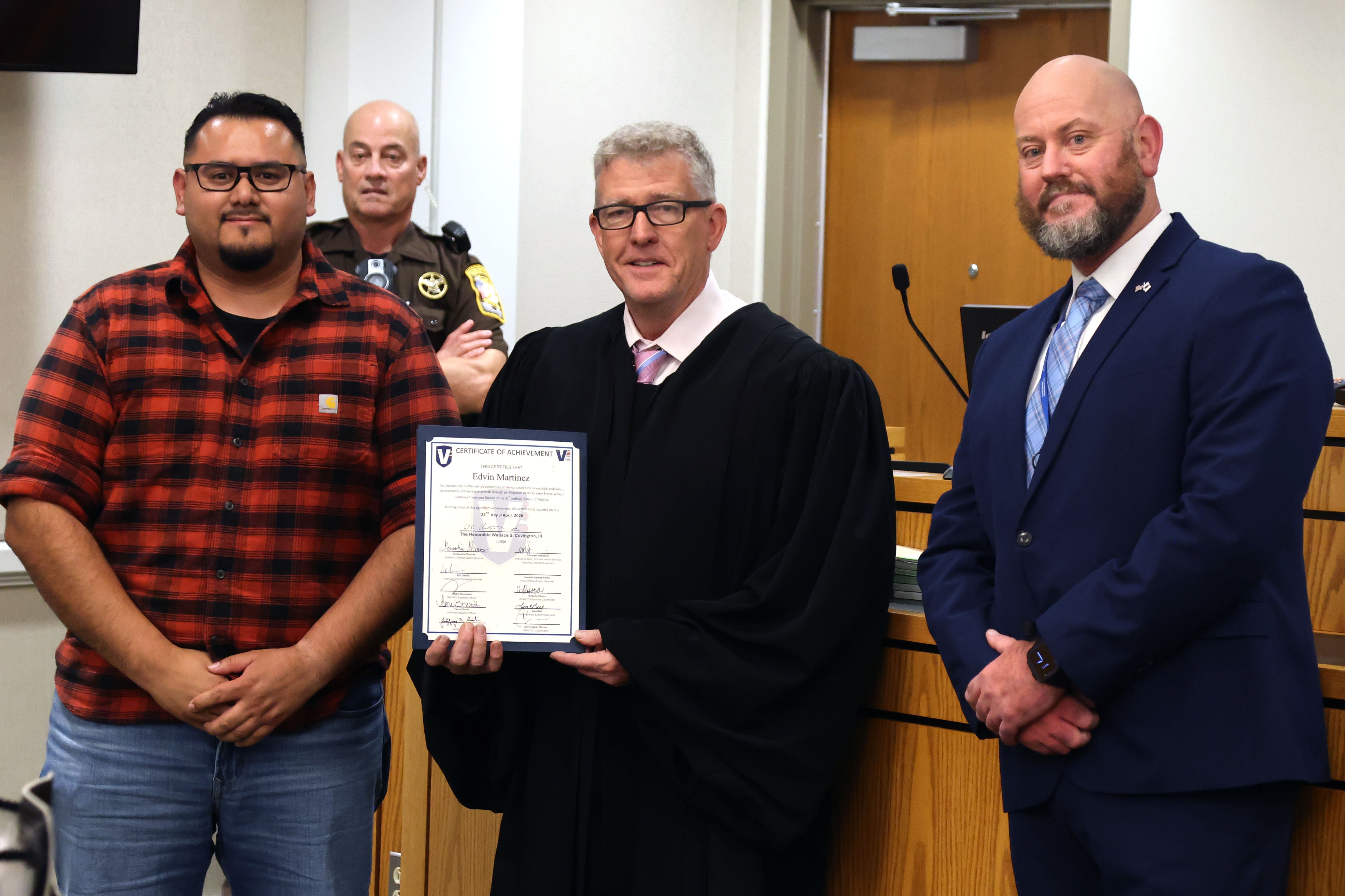
For some veterans, the transition to civilian life can come with challenges that can lead to involvement in the criminal justice system. In Prince William County, a specialized court program, known as the Veterans Treatment Docket, is helping them rebuild.
According to the U.S. Census, there are approximately 43,000 veterans living in Prince William County. Of those veterans, there are about 300 veterans in Prince William facing criminal charges for substance use at any time. One in every 15 veterans needs substance use treatment, and a significant number of veterans live with co-occurring mental health disorders, such as post-traumatic stress disorder or traumatic brain injury, according to the Veterans Treatment Docket Coordinator, Chris Mayers.
The docket combines accountability with treatment and support, connecting participants with resources to address underlying causes of their involvement. The treatment docket is designed to help veterans with referrals that can aid them in succeeding through the program, which is supported by a team of representatives from the Prince William Commonwealth Attorney’s Office, public defenders, probation officers, the U.S. Department of Veterans Affairs’ Veterans Justice Outreach Program and the Virginia Department of Veterans Services.
Prince William General District Court Judge Wallace S. Covington III presided over the ceremony and thanked the team members for the work they do in supporting the veterans docket and noted the support of the Prince William Board of County Supervisors.
“Those partnerships are integral to helping support the staff and the mentors that come in to help this whole program,” Covington said.
Participants are closely supported, with a focus on long-term stability and personal growth. Team members help monitor veterans’ progress through the docket by connecting them with local, state and federal resources for treatment, housing, therapy, employment, discharge status and help with their disability claims.
The intensive docket lasts a minimum of one year and requires veterans to appear in court twice a month, pass regular drug tests, attend classes and meetings, positioning them to have their sentences reduced or dismissed upon successful completion.
“We're supporting our military, which is what this is about,” Covington said. “But it's also something that should be bigger … in terms of addressing needs and support for the community.”
For those who complete the program, the impact can extend beyond the individual to their families and the broader community. Graduates say the program provides not just structure, but a second chance.
Ramon Nieto said he came to the program in a low point in life and that the program changed him for the better.
“I'm glad to say that I've really, truly been able to get some tools to my toolbox and really meet some great people and just really dive into this and figure out some of the things that have been causing me trauma for years,” said Nieto, a U.S. Army veteran.
Program graduate Edvin Martinez, a U.S. Army veteran, said he, too, benefitted from the docket.
“I do appreciate this program,” Martinez said. “This program definitely had an impact on me, because of this, my kids have a better father.”
At the end of the ceremony, Covington dismissed the charges against the seven veterans who recently completed the program.
Veterans facing charges in Prince William County General District Court and Circuit Court wishing to join the docket can call Veterans Treatment Docket Coordinator, Chris Mayers, at 571-383-1209 or fill out a docket referral form. Veterans must volunteer to enter the docket. Some Veterans Treatment Docket cases may be considered in circuit court.
Latest Press Releases


