


Forms and Fees Subject to Change July 1
CURRENT FEE SCHEDULEFEMA's Preliminary Flood Insurance Rate Maps
VIEW HEREThe County's Draft Phase 3 Chesapeake Bay Action Plan has been submitted to DEQ for review. Submit public comments to [email protected].
View Here

Forms and Fees Subject to Change July 1CURRENT FEE SCHEDULE
FEMA's Preliminary Flood Insurance Rate MapsVIEW HERE
The County's Draft Phase 3 Chesapeake Bay Action Plan has been submitted to DEQ for review. Submit public comments to [email protected]. View Here
PFAS Testing and Fish Consumption Advisory Updates from VADEQ
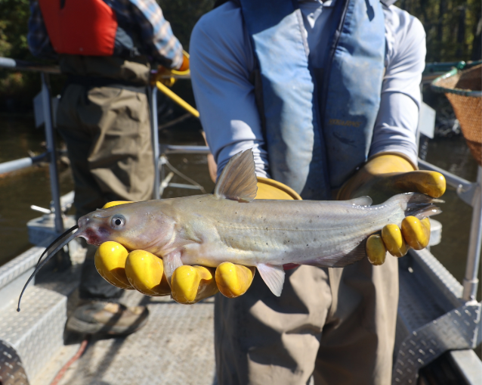
DEQ has begun its annual fish tissue sampling, which runs from spring through fall. Each year, DEQ collects fish tissue samples from waters across Virginia and analyzes them for chemicals that can accumulate as they move up the food chain. DEQ shares data from these samples with the Virginia Department of Health (VDH) which evaluates the results to determine whether fish consumption advisories are needed to protect public health.
Based on DEQ fish tissue data, VDH recently issued fish consumption advisories for specific fish species in the Flanagan Reservoir as well as in the Potomac/Occoquan and Chickahominy River watersheds.
VDH found that several fish species in the Flannagan Reservoir in Dickenson County had unacceptably high levels of PCBs, a legacy “forever chemical.” The fish consumption advisories in the Potomac/Occoquan and Chickahominy River watersheds were issued due to elevated levels of perfluorooctane sulfonate (PFOS) in some fish species. PFOS is part of a larger group of chemicals called per- and polyfluoroalkyl substances (PFAS).
In light of increasing interest in and understanding of PFAS pollution, Virginia has been gearing up for increased demand for PFAS testing at its labs. As part of this effort, Virginia Tech’s Occoquan Watershed Monitoring Laboratory (OWML) recently gained certification from the Virginia Department of Laboratory Services for PFAS testing using EPA method 1633. This makes OWML one of just two labs in Virginia certified to perform PFAS testing with this method.
Latest Press Releases


