


Free Fall Paper Shred
Location, Time and GuidelinesDumpster Days/Community Cleanup Schedule
Date, Time and LocationAmerica Recycles Month Q&A
Locations and TimeProof of Residency Information
Requirement DetailsPrince William County Landfill & Compost Facility are now open on Sundays 7 a.m.–4 p.m., Thursdays 7 a.m.–6 p.m., all other days 7 a.m.–4 p.m. HHW/Electronics Recycling program at the Landfill is open Wednesdays and Saturdays, 8 a.m. to 4 p.m.
New Hours In Effect!

Free Fall Paper Shred Location, Time and Guidelines
Dumpster Days/Community Cleanup ScheduleDate, Time and Location
America Recycles Month Q&A Locations and Time
Proof of Residency InformationRequirement Details
Prince William County Landfill & Compost Facility are now open on Sundays 7 a.m.–4 p.m., Thursdays 7 a.m.–6 p.m., all other days 7 a.m.–4 p.m. HHW/Electronics Recycling program at the Landfill is open Wednesdays and Saturdays, 8 a.m. to 4 p.m.New Hours In Effect!
Virginia’s Styrofoam® Ban Begins
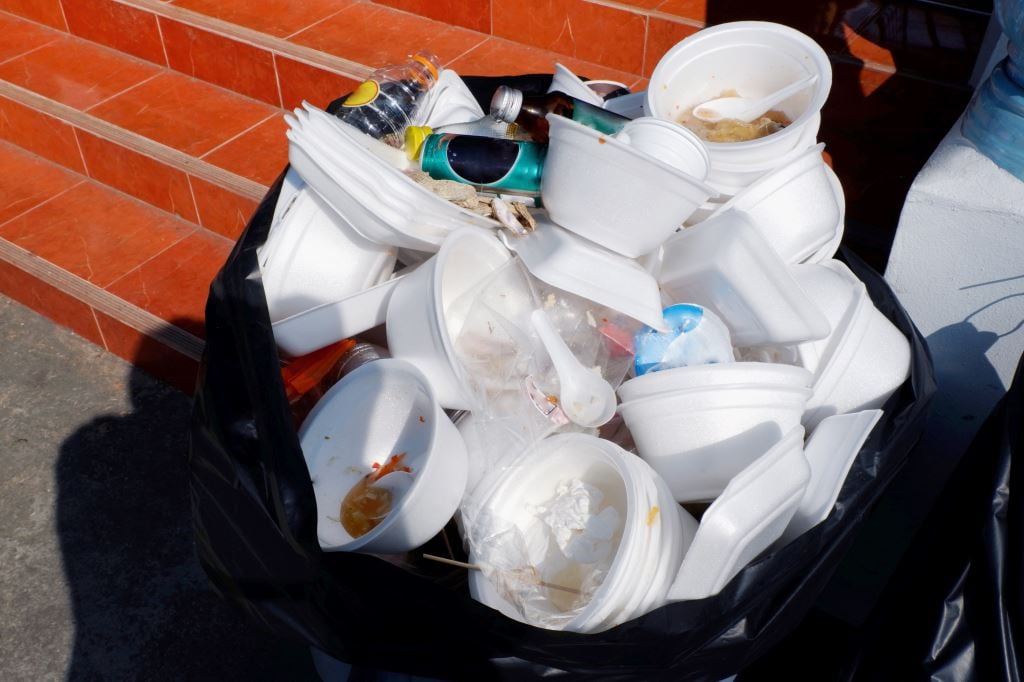
Expanded polystyrene (EPS) food service products affected
By Virginia law, on July 1, 2025, food vendors with 20 or more locations in Virginia, including schools, had to stop using containers made from expanded polystyrene (EPS), commonly known as Styrofoam®. By July 1, 2026, all other food vendors must also eliminate the use of these products.
A food vendor is defined as any establishment that provides prepared food for public consumption on or off its premises and includes a store, shop, sales outlet, restaurant, grocery store, supermarket, delicatessen, or catering truck or vehicle; any other person who provides prepared food; and any individual, organization, group, or state or local government entity that regularly provides food as a part of its services. The ban includes all food service items such as plates, cups, bowls, trays and hinged containers.
EPS is difficult to recycle, hazardous to wildlife, and potentially toxic to humans.
According to the Virginia Department of Environmental Quality (VA DEQ) website:
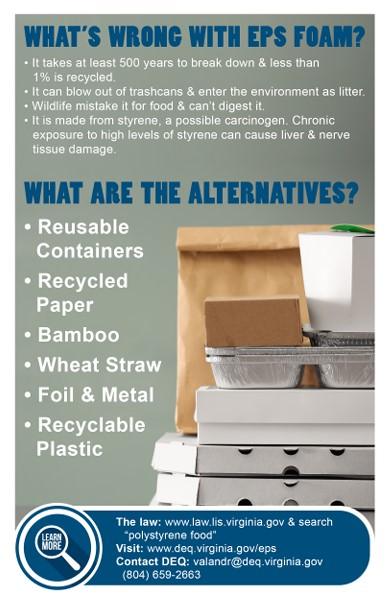
- Less than 1% of EPS is recycled. EPS takes at least 500 years to break down and it takes up valuable space in our landfills.
- EPS frequently ends up as litter. It can blow out of trashcans and pollute rivers and the ocean. Wildlife mistake EPS for food but cannot digest it.
- EPS is primarily made from styrene, a possible carcinogen. Chronic exposure to high amounts of styrene for extended periods can cause liver and nerve tissue damage.
VA DEQ recommends these alternatives to EPS/Styrofoam®:
- Reusable containers
- Recycled paper or plant-based fibers (bamboo, wheat straw)
- Foil or metal containers
- Recyclable plastics
The Foam Free Virginia initiative offers resources and guidance to help food vendors make the switch. The Foam Free PWC page will help businesses in Prince William County navigate the change.
Food vendors may apply for an exemption from their locality if they can demonstrate the ban creates "undue economic hardship". Extensions may be granted for up to one year and a vendor may reapply.
For anyone currently using EPS products in any industry, the legislation also discourages the sale and use of EPS products and encourages the promotion of alternatives to EPS.
Foam Free Virginia Fact Sheet:
Visit www.pwcva.gov/disposalguide for details on proper disposal or recycling of items in Prince William County.
Latest Press Releases


