3


Forms and Fees Subject to Change July 1
CURRENT FEE SCHEDULEFEMA's Preliminary Flood Insurance Rate Maps
VIEW HEREThe County's Draft Phase 3 Chesapeake Bay Action Plan has been submitted to DEQ for review. Submit public comments to [email protected].
View Here
Close 
Forms and Fees Subject to Change July 1CURRENT FEE SCHEDULE
FEMA's Preliminary Flood Insurance Rate MapsVIEW HERE
The County's Draft Phase 3 Chesapeake Bay Action Plan has been submitted to DEQ for review. Submit public comments to [email protected]. View Here
 Back
Back


Reforest PWC
Image
Reforest PWC is a voluntary County program that partners with private property owners to convert suitable open, grassy areas into long-term native forests at no cost to the landowner. Through an application and onsite consultation process, County Arborists work directly with participants to evaluate property conditions, identify ideal planting areas, and guide the project from planning through installation. Once approved, the County coordinates tree planting by a supervised contractor, installs protective measures to ensure successful establishment, and conducts follow-up inspections to support long-term survival. The result is a diverse, self-sustaining forest that enhances wildlife habitat, improves water quality, increases climate resilience, and provides lasting environmental benefits for both the property owner and the broader community.
To help ensure a smooth onsite consultation, please gather any available documentation related to your property, including:
-
Private underground installations, such as irrigation systems or electric fences
-
Property boundary information, including surveys or plats, if available
-
House location survey plats, which can help identify utilities, septic systems, or drain fields
The County cannot plant trees over underground infrastructure or in areas where planting could damage existing systems or affect long-term tree health. Having this information available during the initial walkthrough will help address any concerns and avoid delays.
If you think a neighboring property may also be a good candidate for the program, feel free to invite your neighbor to join the onsite meeting.
-
Ideal tree planting areas are large, open grassy spaces that receive enough sunlight to support young tree growth.
Please note:
-
Trees cannot be planted over underground infrastructure, including septic drainage fields, underground utilities, or utility easements.
-
County planting contractors will identify and avoid these restricted areas during installation.
As shown in the diagram below, the area outlined in blue represents the portion of the property suitable for replanting, while the red area indicates the septic drainage field and associated lines that must be excluded from planting.
This approach ensures successful tree growth while protecting existing infrastructure.
Image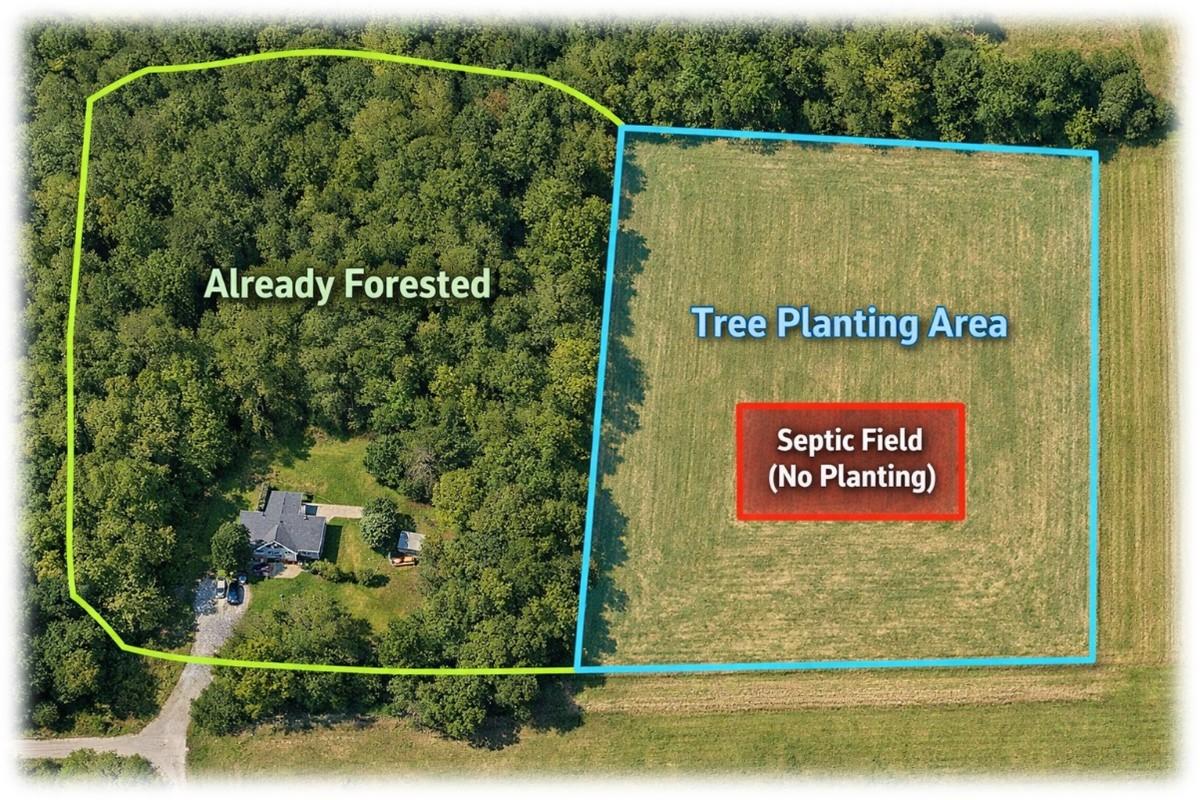
-
-
Arborist Consultation
Meet with a County Arborist to assess your property and confirm planting suitability.
-
Sign the Memorandum of Understanding
Review and sign the program agreement outlining long-term care expectations.
-
Sign the Right of Entry Agreement
Grant permission for County staff and contractors to access the property for planting and inspections.
-
Schedule the Planting Date
The County coordinates with the planting contractor to set a planting timeline.
-
Tree Planting Installation
Native trees and shrubs are professionally installed on your property.
-
Year 1 Inspection
Staff return to assess tree survival and replace any trees if needed.
-
Year 4–5 Tube Removal
Protective tree tubing is removed once trees are well established.
-
A Lifelong Forest
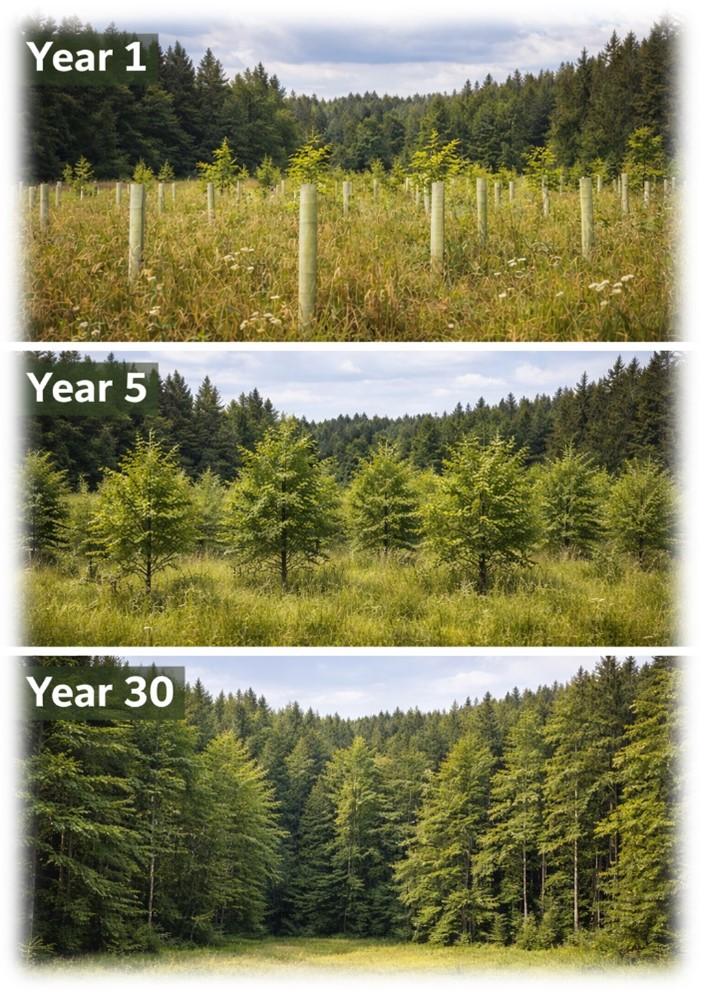
Your new forest continues to grow and provide environmental benefits for decades to come.
-
County-supervised contractors typically plant approximately 450–600 native trees per acre, depending on site conditions.
The planting design includes a diverse mix of native Virginia species, such as:
-
Deciduous and evergreen trees
-
Overstory and understory species
-
Native shrubs
This intentional diversity makes the forest more resilient to climate change, invasive species, and extreme weather, helping ensure the long-term success of each planting.
A list of commonly used species is provided below, based on nursery availability. While this list is not exhaustive, only species native to Virginia are planted through this program. Exact species selections can be discussed during your onsite consultation with a County Arborist.
Image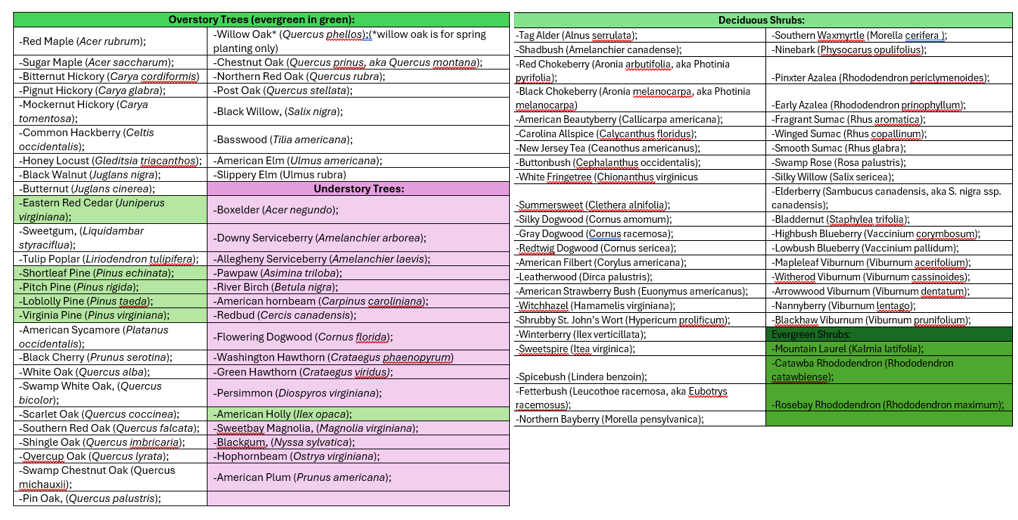
-
What to Expect: Installation Process
Expand all- 1. Mowing & Site Preparation
Before planting begins, the site is mowed or lightly cleared to create an even surface and allow sunlight to reach young trees during early growth. After planting, the area is left undisturbed. Tall grasses will naturally grow around the trees, helping the site transition into a forested landscape.
Image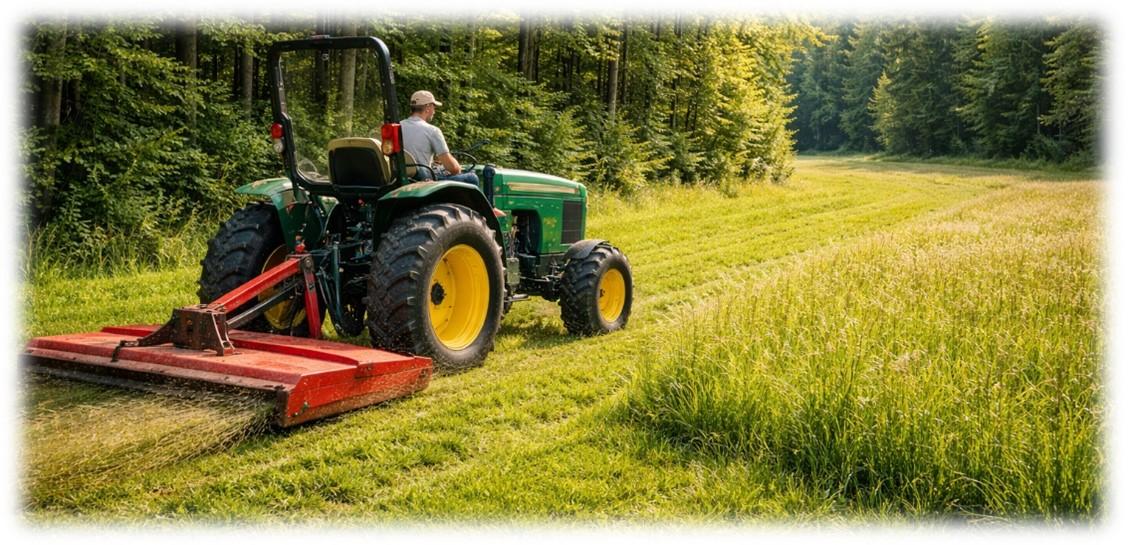
- 2. Tree Planting
Trees range in size from 6 inches to up to 2.5 feet tall at planting. They are installed approximately 10 feet apart in a staggered pattern to create a natural forest appearance rather than straight rows.
The planting includes a diverse mix of native deciduous and evergreen trees, along with understory species and shrubs. This diversity improves long-term resilience, supports wildlife habitat, and restores the layered structure of a healthy forest.
Image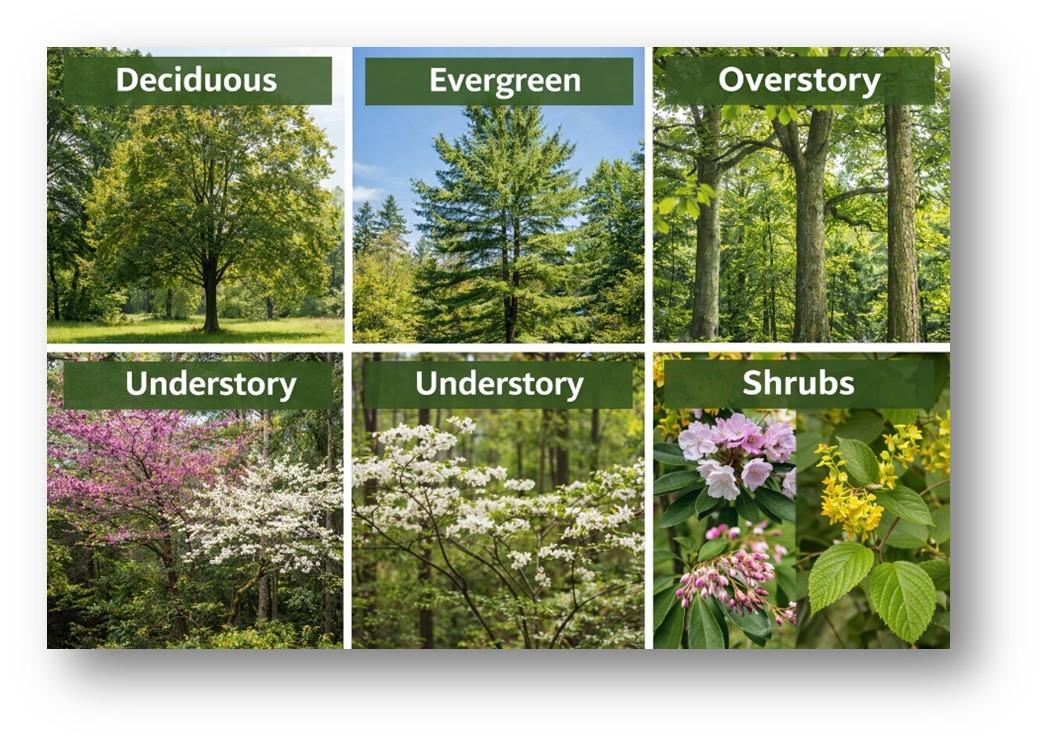
- 3. Coco-Fiber Matting
Each tree receives a biodegradable coconut fiber mat placed around its base. These 20–30 inch mats help:
-
Prevent vines and tall grasses from smothering young trees
-
Retain soil moisture during early growth
-
Mimic the protective leaf layer found in natural forests
Image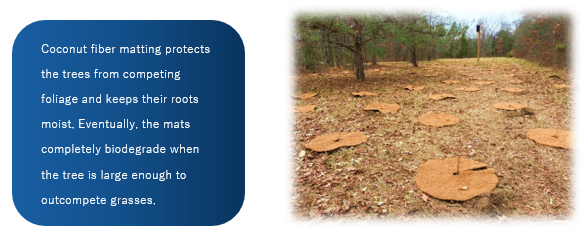
-
- 4. Stakes & Protective Tree Tubing
Every tree is protected with 4-foot-tall biodegradable tubing secured with wooden oak stakes. These tubes:
-
Protect young trees from deer and other wildlife
-
Reduce damage during early growth
-
Include discreet bird netting on top to prevent birds from entering
While the tubing may be noticeable at first, growing grasses and vegetation quickly soften its appearance.
Image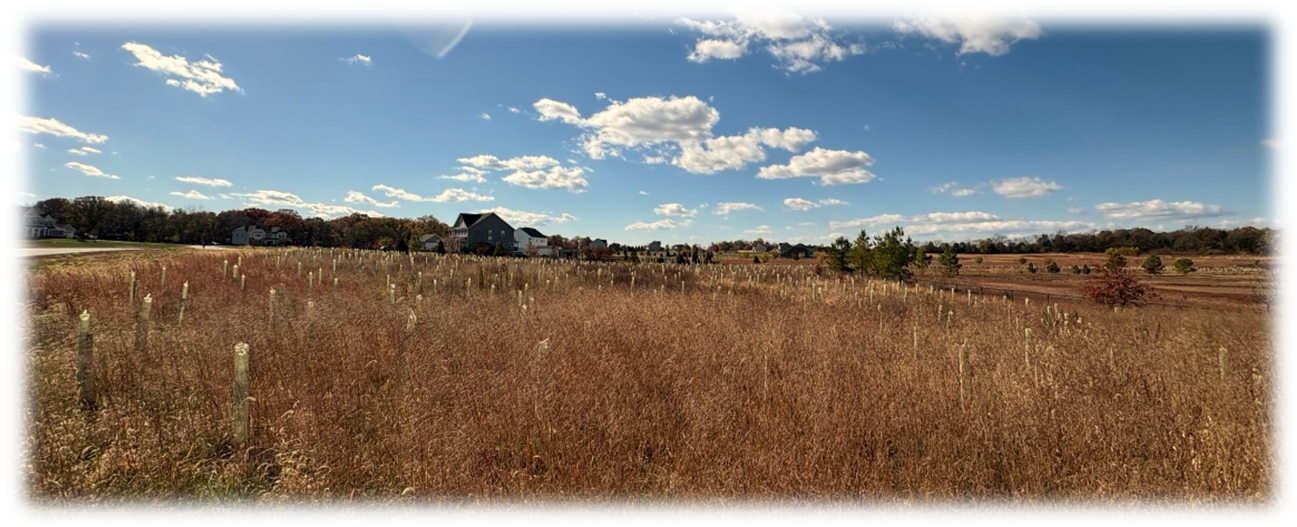
-
- 5. Annual Inspection & Long-Term Care
County staff return within one year of planting to inspect the site and ensure at least a 75% survival rate. If survival falls below this threshold, replacement trees are installed to maintain the proper species mix.
After 4–5 years, once trees are well established, the protective tubing is removed—leaving behind a growing forest that will continue to mature for decades.
Image